
relevant (?) coursework
why must us resume builders only provide coursework that is “relevant?” how am I supposed to know what is relevant? what even is “relevance?” the nuances of relevance theory are out of the scope of this section, but if you’re here to gauge my writing ability the topic/genre shouldn’t matter (right…? I hope?)
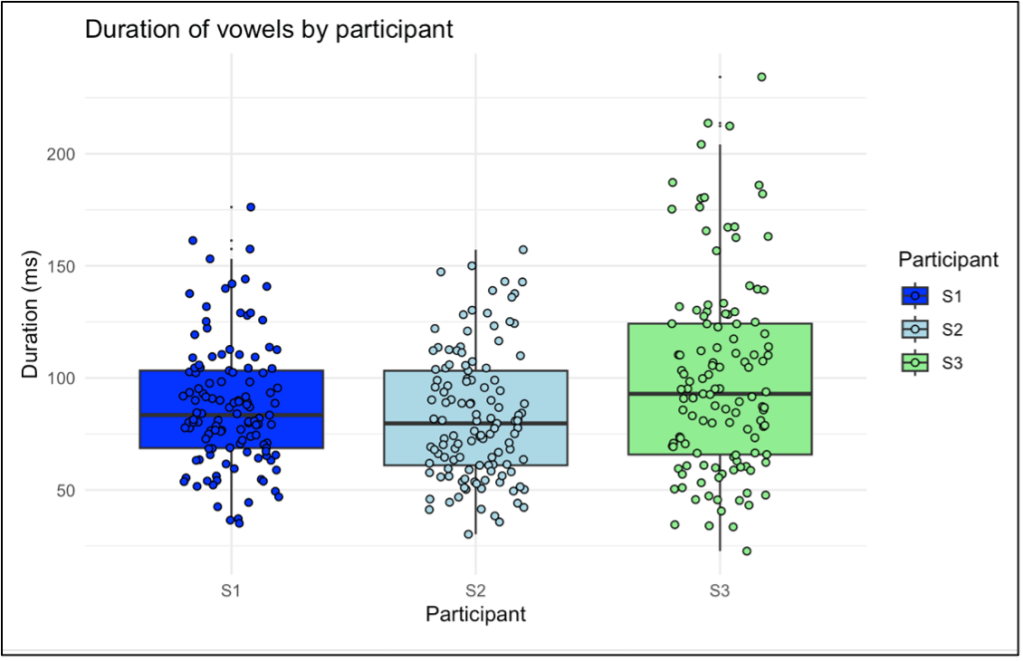
(S3 is the non-native spanish speaker)
Spanish Vowel Duration
Compared to English, Spanish vowels are understood to be more uniform in length, while English vowels are weakened and lengthened with stress. This project was an attempt to investigate the “stress timing” and “syllable timing” distinction by comparing L1, L2, and bilingual speakers of Spanish. While overall the L2 speaker had more variation in length, all speakers showed variation regardless of L1 depending on other phonetic variables, revealing interesting interactions between prosody, transfer, and environment.
Predicting the Past
Have you ever noticed how “snuck” … well … snuck into English and replaced “sneaked?” What other verbs are at risk of becoming irregular? If, hypothetically, cry were to fall victim , what would its past tense be? Luckily, we don’t have to speculate anymore! Some Reddit users have proposed options based on other irregular verbs, like in these meme that had people arguing whether the past tense would be crew or crode. But what about crove and crid? If cry and fly are more similar to each other than cry and drive, in theory crew would be the easy choice. However, things get more complicated when developing a full paradigm.

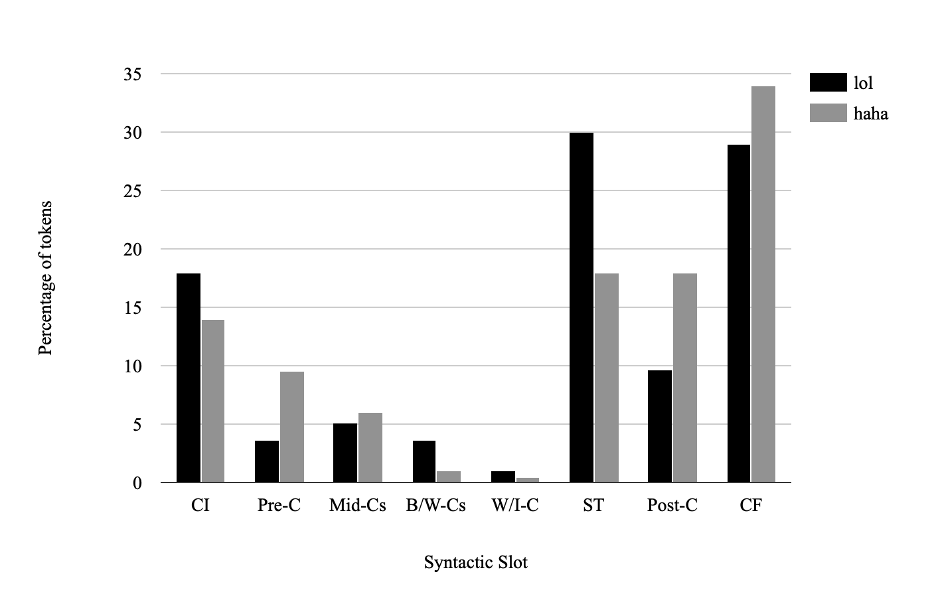
(For context: CI = Clause initially, ST = Standalone, CF = Clause F– wait a minute just read the paper if you’re that interested lol)
Looking at the functions and syntax of online laughter:
lol and haha in iWeb
My senior capstone project! I looked at how “lol” and “haha” are used on the internet using the iWeb corpus. Specifically, if there was a systematic way people use these terms to do specific things (evaluate, mitigate, emphasize), In a nutshell: while there was a significant difference in where they were used (see graph!), the location did correlate with the function they serve. Interesting, but I have yet to understand why. More to come!
TESOL Newsletter
Under the guidance of the head of UVM’s TESOL department, I wrapped up a semester’s worth of events, opinions, testimonials, and stories in a publication for current and potential TESOL students, faculty in the SWLC, and beyond the UVM community. While this project got cut short and unfortunately didn’t become a recurring publication, the first issue was well received and it has the potential to be picked up in the future.
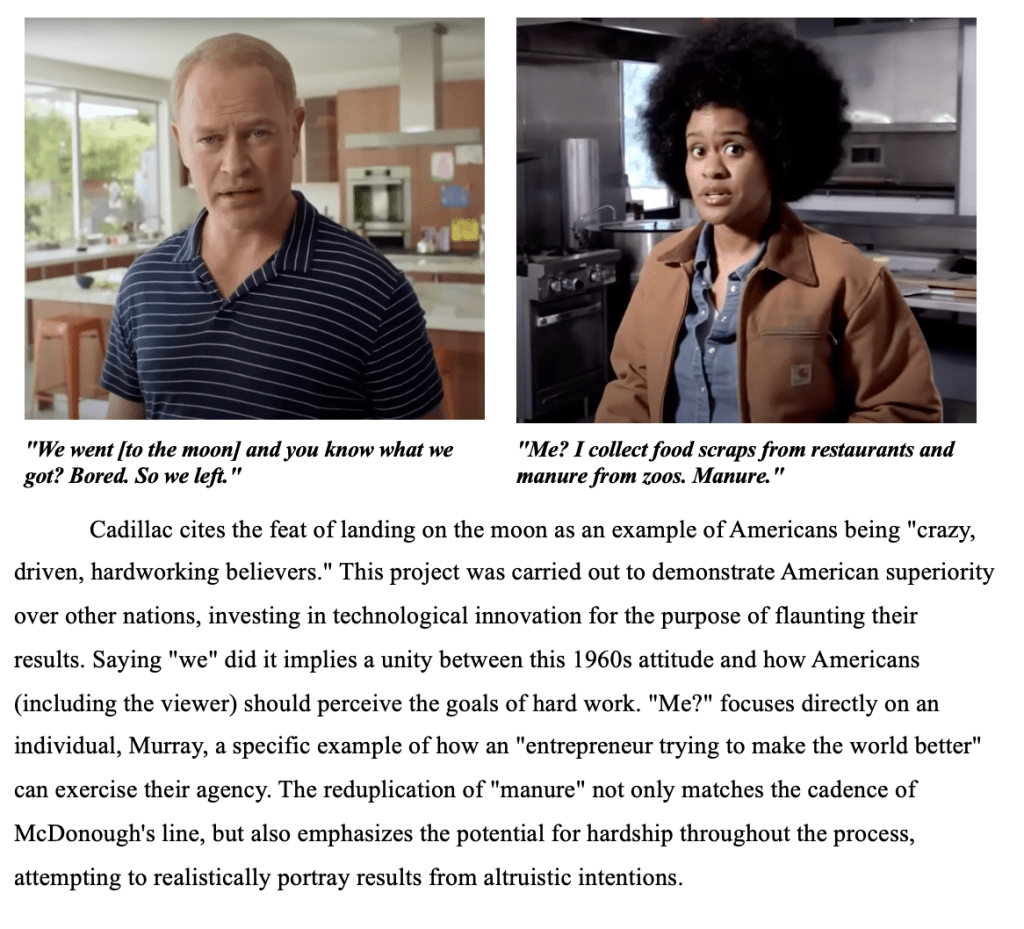
Why do we work so hard?
Electric cars, combative advertising, and a neoliberal critique of American exceptionalism
For my final project in a class on language in the media, I took a multimodal approach to comparing a Cadillac commercial and a parody of it by Ford. I start by exploring the philosophy behind advertising through the lens of neoliberalism, and then I critically analyze the (seemingly) opposing messages of the two advertisements, highlighting how social commentary is used to send a message about a product. I break down the verbal and visual semiotics in the commercial shot by shot to look at what each company is trying to say in light of what the actors are saying.
Gender and Swearing
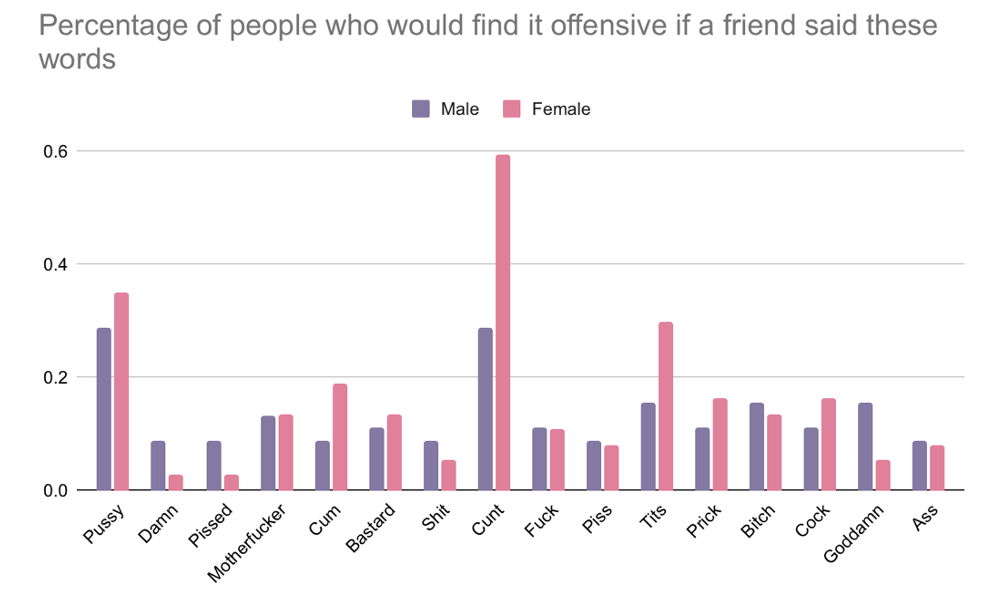
My first crack at quantitative sociolinguistics looked at how gender influences perceptions and judgements of taboo language. I informally surveyed some UVM students and found that words that refer to females or things associated with females (bitch, pussy, cunt) represent “feminine” qualities and are stronger pejoratives when used towards men than the male equivalents (dick, bastard) used towards women.
This project helped get me into grad school!
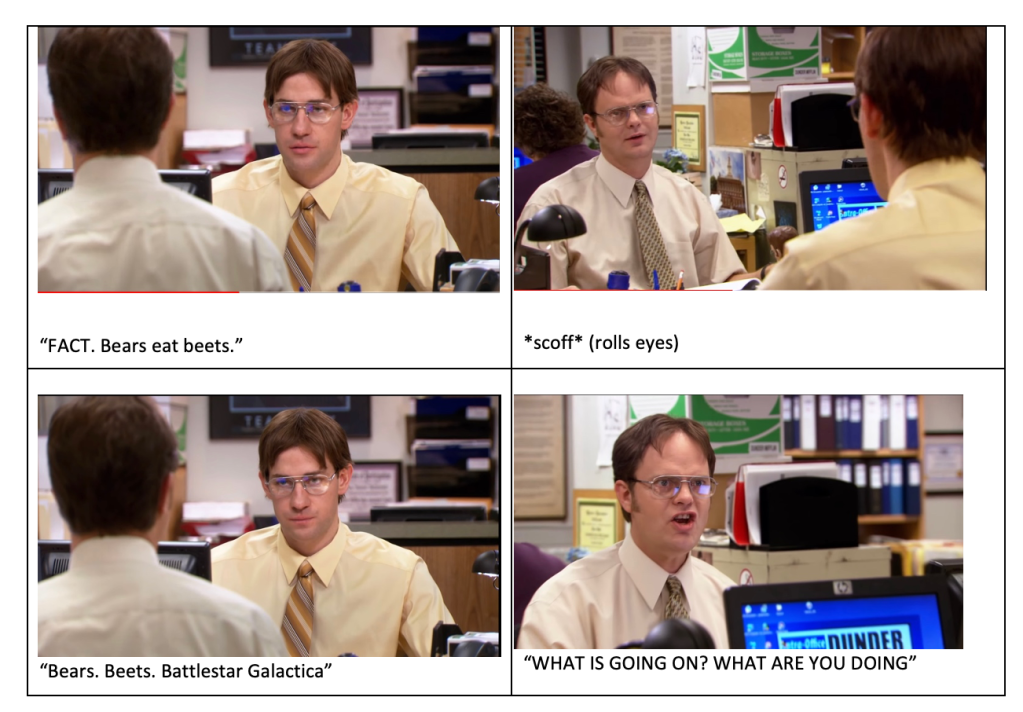
How Relevance, Footing, and Speech Acts Construct Humor in The Office
What could be more fun to read than a systematic and structural breakdown of why deadpan humor is funny. The joke here is that these statements are unprompted, and therefore have no established relevance, and Dwight only responds when he realizes the statements are in fact relevant. Jim is mocking him! See? Hilarious!
Variation in vowel length by region
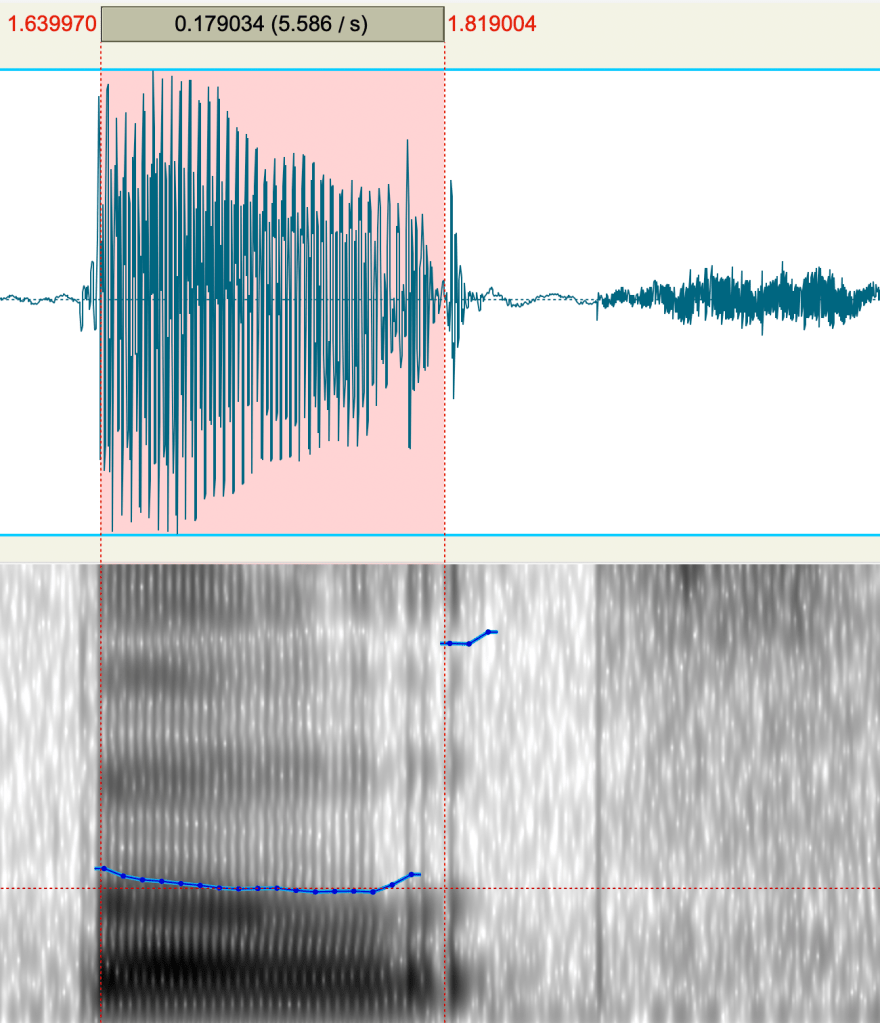
Each student in my phonetics course recorded a list of words in the carrier phrase “I’m saying __ slowly.” We measured the average length of each vowel and reported the region we were from. Turns out vowel length correlates with regional dialect!
Enjoy this stunning section of a spectrogram from PRAAT of my pronunciation of the diphthong [ou] in “boat.”
 The Weird Word Nerd